















































04 December 2023 EN388 Safety Glove Ratings Explained: A Complete Guide to EN388:2016+A1:2018
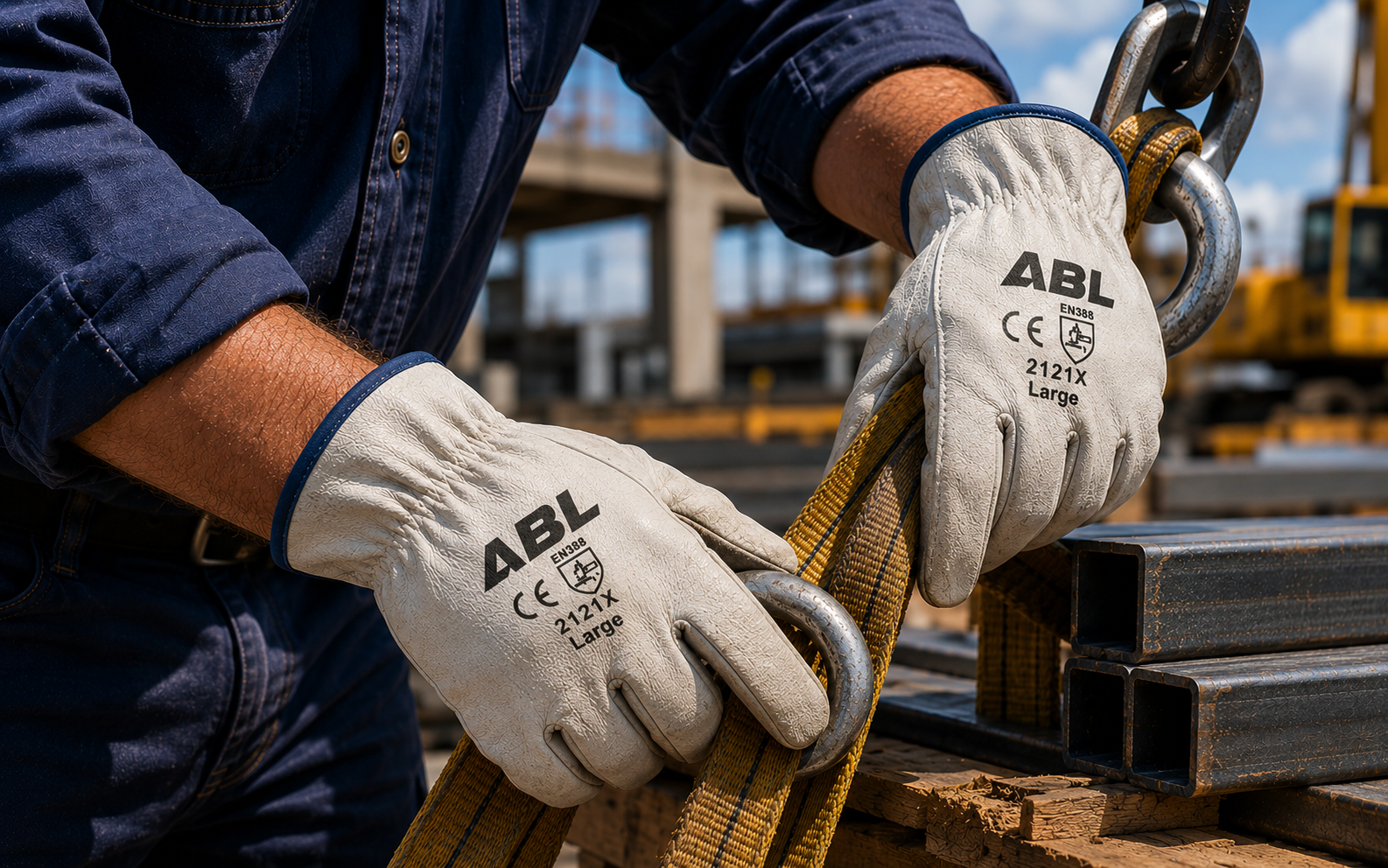
ABL's Guide To Safety Glove Ratings
EN388 Safety Glove Ratings Explained:
A Guide To EN 388:2016+A1:2018
When choosing safety gloves, the numbers and letters printed on the glove are not just product codes. They are performance ratings that help show how the glove has been tested against mechanical risks such as abrasion, blade cut, tearing, puncture and, where applicable, impact protection.
EN 388 is one of the most commonly recognised glove rating systems used throughout the safety and PPE industry. Although it is a European standard, EN 388 glove ratings are widely used in Australia to help businesses compare work gloves, cut resistant gloves and general hand protection.
What Is EN 388:2016+A1:2018?
EN 388:2016+A1:2018 is the current commonly referenced version of the European standard for protective gloves against mechanical risks. It specifies requirements, test methods, marking and information supplied for gloves designed to protect against abrasion, blade cut, tear, puncture and, where relevant, impact protection.
You may still hear the standard referred to as EN388:2016, however many manufacturers now reference EN 388:2016+A1:2018 because of the 2018 amendment.
For end users, the most important part is understanding what the glove marking means and choosing a glove based on the actual workplace hazard rather than simply choosing the highest number available.
What Do The Numbers On Safety Gloves Mean?
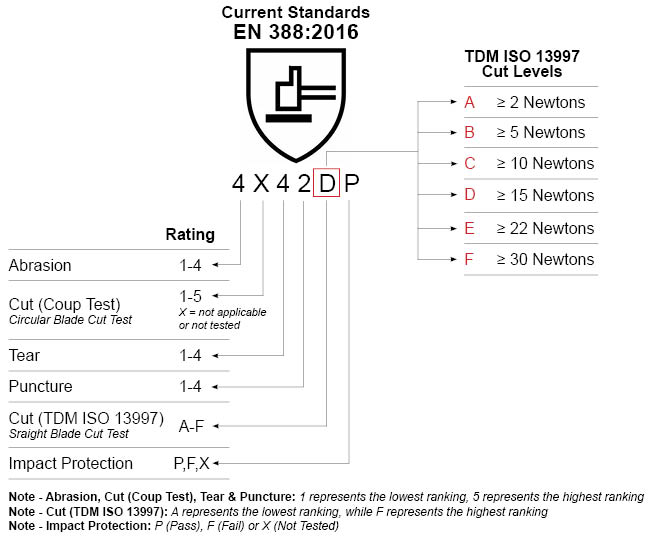
EN 388 rated gloves are marked with a shield pictogram followed by a series of numbers and letters. These symbols show how the glove performed during specific mechanical protection tests.
This code is usually read from left to right:
| Position | Test | Rating Format | What It Means |
|---|---|---|---|
| 1 | Abrasion Resistance | 1-4 | How well the glove resists rubbing and wear from rough surfaces. |
| 2 | Blade Cut Resistance - Coup Test | 1-5 or X | How the glove performs against a rotating circular blade. X means the test was not performed or is not applicable. |
| 3 | Tear Resistance | 1-4 | How much force is required to tear the glove material. |
| 4 | Puncture Resistance | 1-4 | How much force is required to puncture the glove material with a standard test probe. |
| 5 | TDM Cut Resistance - ISO 13997 | A-F or X | A more detailed cut resistance rating, especially useful for high cut resistant glove materials. |
| 6 | Impact Protection | P, F or X | P indicates the glove has passed the optional impact protection test. If no impact claim is made, this may be left blank or marked X. |
The higher the number or letter, the greater the tested performance in that specific category. However, a higher rating in one area does not automatically mean the glove is better for every job.
EN388 Glove Rating Tests Explained
1. Abrasion Resistance
Abrasion resistance measures how well the glove material withstands repeated rubbing against an abrasive surface. This is important for handling rough materials, timber, cardboard, bricks, metal parts and general industrial equipment.
The glove is rated from 1 to 4, with 4 being the highest abrasion resistance rating.
2. Blade Cut Resistance - Coup Test
The Coup Test uses a rotating circular blade to measure how resistant the glove material is to cutting. In the older EN388:2003 standard, this was the main cut resistance rating.
With modern cut resistant fibres, the blade can become blunt during testing, which may affect the result. This is why the newer EN388 rating also includes the TDM ISO 13997 cut test.
3. Tear Resistance
Tear resistance measures the force required to tear the glove material after it has been cut or slit. This can be important when gloves are exposed to snagging, pulling or sharp edges during work.
The rating ranges from 1 to 4.
4. Puncture Resistance
Puncture resistance measures how much force is required to pierce the glove material using a standard test probe. This helps compare gloves used around splinters, wire, rough edges and pointed objects.
This rating also ranges from 1 to 4.
5. TDM Cut Resistance - ISO 13997
The TDM cut test measures the force required for a blade to cut through the glove material over a fixed distance. This test is especially useful for higher cut resistant gloves because it provides a more reliable result where the Coup Test may be affected by blade dulling.
The result is shown as a letter from A to F, with F being the highest cut resistance level under this rating system.
6. Impact Protection
Impact protection is an optional test. If the glove has passed the impact protection test, the marking may include the letter P.
This is commonly relevant for gloves used in mining, construction, oil and gas, heavy industry and applications where the back of the hand may be exposed to impact hazards.
What Does The X Mean In An EN388 Rating?
If you see an X in an EN388 rating, it usually means that specific test was not performed, is not applicable, or the result cannot be used for that position.
For example, a glove may show 4X43D. In this case, the glove still has valid EN388 ratings, but the Coup Test cut rating has not been used, and the TDM cut rating letter provides the more relevant cut resistance information.
What Is The Difference Between EN388:2003 And EN388:2016+A1:2018?
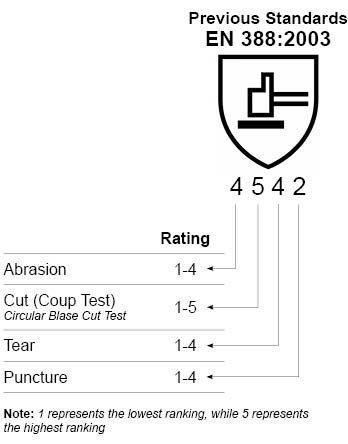
EN388:2003 was the older version of the mechanical protection glove standard. It rated gloves using four main numbers: abrasion, blade cut, tear and puncture.
The newer EN388:2016 version introduced important changes, including the TDM ISO 13997 cut resistance letter rating and optional impact protection marking. The later A1:2018 amendment is why many manufacturers now reference the standard as EN 388:2016+A1:2018.
| Feature | EN388:2003 | EN 388:2016+A1:2018 |
|---|---|---|
| Main Rating Format | Four numbers | Four numbers plus one or two additional symbols |
| Abrasion Test | Included | Included, with updated testing considerations |
| Coup Cut Test | Main cut resistance test | Still included, but may be replaced by X where TDM testing is more appropriate |
| TDM ISO 13997 Cut Test | Not included in the same way | Included as a letter rating from A to F |
| Impact Protection | Not included | Optional P marking where impact protection is tested and passed |
Many older gloves may still display the EN388:2003 style rating. This does not automatically mean the glove is poor quality. It means the marking follows the older testing format. When comparing gloves, always check the rating system being used and confirm the glove suits the application.
What Do These Changes Mean For Users?
For most workers, the glove may feel and perform the same. The biggest difference is that the newer EN388 rating gives a clearer way to compare cut resistant gloves, especially where high cut resistant fibres are used.
Previously, many gloves were simply described as a Cut 5 glove. Under the newer system, the TDM rating helps separate cut resistance into levels A, B, C, D, E and F. This makes it easier to choose a glove that suits the actual cutting hazard.
How To Choose The Right Safety Glove
The best safety glove is not always the glove with the highest EN388 rating. The right glove depends on the task, hazard, fit, grip, dexterity and working environment.
- For rough handling: Look for strong abrasion and tear resistance.
- For sharp edges or sheet metal: Focus on the TDM cut resistance letter rating.
- For wire, splinters or pointed materials: Consider puncture resistance.
- For heavy industry: Consider whether impact protection is required.
- For detailed work: Balance cut resistance with comfort, flexibility and dexterity.
- For oily or wet work: Choose a coating that provides suitable grip for the environment.
A glove that is too bulky may reduce dexterity and increase handling issues, while a glove with too little protection may leave workers exposed to injury. Always assess the actual task before selecting hand protection.
ABL's Choice: Safety Gloves For Different Uses
Different jobs need different types of hand protection. Below are some common glove options to consider based on the task, hazard and level of protection required.
General Handling Gloves
A practical choice for warehousing, logistics, packing, assembly work and everyday material handling where comfort, grip and durability are important.
Cut Resistant Gloves
Recommended for handling sharp materials such as sheet metal, glass, steel, aluminium, plastic edges and fabrication materials where cut protection is required.
Nitrile Coated Gloves
Maxisafe Rippa Grippa Nitrile Coated Gloves
Useful for tasks that require grip, dexterity and abrasion resistance, especially in dry, slightly oily or general industrial handling applications.
Impact Protection Gloves
G-Force Hi-Vis Full Finger Mechanics Gloves
Designed for heavy industry, construction, mining, transport and mechanical work where the back of the hand may be exposed to bumps, knocks or impact hazards.
Riggers Gloves
ABL Premium Cowhide Riggers Gloves
Ideal for general rigging, construction, transport, farming, warehousing, maintenance and heavy-duty material handling where durability, grip and hand protection are essential.
Made from premium cowgrain leather, these tough-wearing gloves offer excellent comfort and durability while providing resistance to oil and water for a wide range of industrial applications.
Welding Gloves
Blue & Gold Welders Gauntlet Gloves
Designed for welding, fabrication and hot work applications where hand protection is required against heat, sparks, spatter and rough handling.
Welding gloves are generally made from durable leather and are selected based on the type of welding, required dexterity and level of heat protection needed.
Chemical Resistant Gloves
Green Double Dipped PVC Chemical Gloves
Required for certain chemical handling tasks where standard mechanical protection gloves may not provide the right type of protection.
Disposable Gloves
Capri Blue Powder Free Vinyl Gloves
Suitable for food handling, cleaning, hygiene, laboratories, light maintenance and tasks where contamination control or single-use protection is required.
Tip: Always choose gloves based on the actual task. EN388 ratings are helpful for mechanical protection, but other hazards such as chemicals, heat, welding, hygiene or electrical risks may require different glove types or additional standards.
Important: EN388 Ratings Are A Guide, Not A Full Risk Assessment
EN388 ratings are useful for comparing glove performance, but they do not replace a workplace risk assessment. Other factors such as chemicals, heat, electrical hazards, vibration, biological hazards and glove compatibility may require different standards or additional PPE considerations.
If your workplace has specific hazards, the glove should be selected based on the full task and risk, not just the EN388 marking.
Need Help Choosing The Right Safety Gloves?
Choosing the right glove depends on the work being done, the hazard level and the protection required. If you are unsure what glove rating you need, ABL Distribution can help you compare options and select suitable hand protection for your workplace.
Contact ABL Distribution