
















































01 July 2026 Complete Guide to Pallet Strapping, Strapping Tools & Load Securing
ABL's Guide To Pallet Strapping & Load Securing
Complete Guide to Pallet Strapping, Strapping Tools & Load Securing
Learn how to choose between polypropylene strapping, polyester PET strapping, composite strapping, steel strapping and polywoven strapping, plus the right pallet strapping tools, machines, dispensers, seals, buckles and protective corners for your application.
What Is Pallet Strapping?
Pallet strapping is used to secure cartons, products and palletised loads during storage, handling and transport. Also referred to as strapping, strap, packing straps, pallet straps or pallet strap, it helps hold goods firmly in place and reduces the risk of movement, shifting or damage.
The right strap depends on the load weight, product type, storage conditions, transport method and equipment being used. Some loads only require light plastic strapping, while heavier or sharper loads may need polyester PET strapping, composite strapping, steel strapping or specialist heavy duty strapping equipment.
Types of Pallet Strapping
There are several common types of strapping used across warehousing, logistics, manufacturing, construction and shipping. Each type has different strength, stretch, cost and handling benefits.
Polypropylene Strapping
Polypropylene strapping, also known as PP strapping, poly strapping or plastic strapping, is a lightweight and cost effective option for light to medium duty packaging.
- Best for cartons, boxes and lighter pallets
- Available in hand grade and machine grade options
- Suitable for general packaging and warehouse use
- Works with plastic buckles, metal buckles, metal seals, tensioners and crimpers
Polyester PET Strapping
Polyester PET strapping is strong, durable and shock absorbent. It is commonly used for heavier palletised loads and is often used as an alternative to steel strapping.
- Best for medium to heavy duty loads
- Good tension retention during transport
- Resistant to chemicals and weather
- Suitable for pallets, timber, bricks, pipes and construction materials
Composite Strapping
Composite strapping, also known as cord strapping or composite cord strapping, is a strong and flexible strapping option made from polyester fibres with a protective coating. It is often used as a safer and easier-to-handle alternative to steel strapping for many load securing applications.
- Best for medium to heavy duty loads
- Ideal for irregular, awkward or fragile loads
- Lightweight, flexible and rust-free
- Suitable for timber, machinery, export pallets, construction materials and bundled goods
- Commonly used with wire buckles and a compatible tensioner
Steel Strapping
Steel strapping, metal strapping or steel metal strapping is used for heavy duty and industrial applications where maximum strength and minimal stretch are required.
- Best for very heavy or sharp-edged loads
- Commonly used for steel, machinery, timber and industrial products
- Available in ribbon wound, rope wound and high tensile options
- Requires compatible steel strapping tools, seals and dispensers
Polywoven Strapping
Polywoven strapping is flexible, strong and easy to handle. It is commonly used where a softer strap is preferred and where rust-free performance is important.
- Best for irregular or delicate loads
- Flexible and lightweight
- Will not rust
- Suitable for use with polywoven strapping dispensers and compatible buckles
Bonded Hot Melt Polyester Baling Machine Strapping
Bonded hot melt polyester strapping, also known as bonded strapping or hot melt strapping, is a flexible and cost effective strapping option commonly used for bundling, baling and general packaging applications.
- Best for bundling items, bale presses and general packaging needs
- Commonly used in agriculture, abattoirs and baling applications
- Offers sufficient tensile strength to secure loads effectively
- Weatherproof and UV resistant
- Gentle on delicate edges and surfaces
- Hot melt lamination helps provide controlled uncoiling
Pallet Strapping Comparison Guide
Use this comparison table as a simple starting point when choosing between polypropylene, polyester PET, composite, steel and polywoven strapping.
| Strapping Type | Best For | Strength Level | Key Benefits |
|---|---|---|---|
| Polypropylene Strapping | Cartons, light pallets, general packaging, warehouse use | Light - Medium Duty | Cost effective, lightweight, easy to use, available for hand or machine strapping |
| Polyester PET Strapping | Heavy pallets, timber, bricks, pipes, construction materials | Medium - Heavy Duty | Strong, durable, shock absorbent, weather resistant, safer alternative to steel in many uses |
| Composite Strapping | Export loads, machinery, timber, irregular loads, bundled goods, delicate surfaces | Medium - Heavy Duty | Flexible, lightweight, rust-free, shock absorbent, safer to handle than steel in many applications |
| Steel Strapping | Very heavy, sharp, hot or rigid loads | Heavy - Very Heavy Duty | Maximum strength, minimal stretch, suitable for heavy industrial loads |
| Polywoven Strapping | Irregular loads, export loads, delicate surfaces, rust-free applications | Medium Duty | Flexible, lightweight, rust-free, easy to handle |
Load Weight Recommendations
Strapping strength depends on the material, width, thickness and breaking strain. Always check the product specifications before use. As a general guide:
Important: Load weight recommendations are general only. Always choose strapping based on the actual product weight, load shape, transport conditions, handling risks and compatible tool specifications.
Strapping Machines & Tools Explained
Choosing the right strapping tool or strapping machine helps improve safety, consistency and packaging efficiency.
Manual Strapping Tools
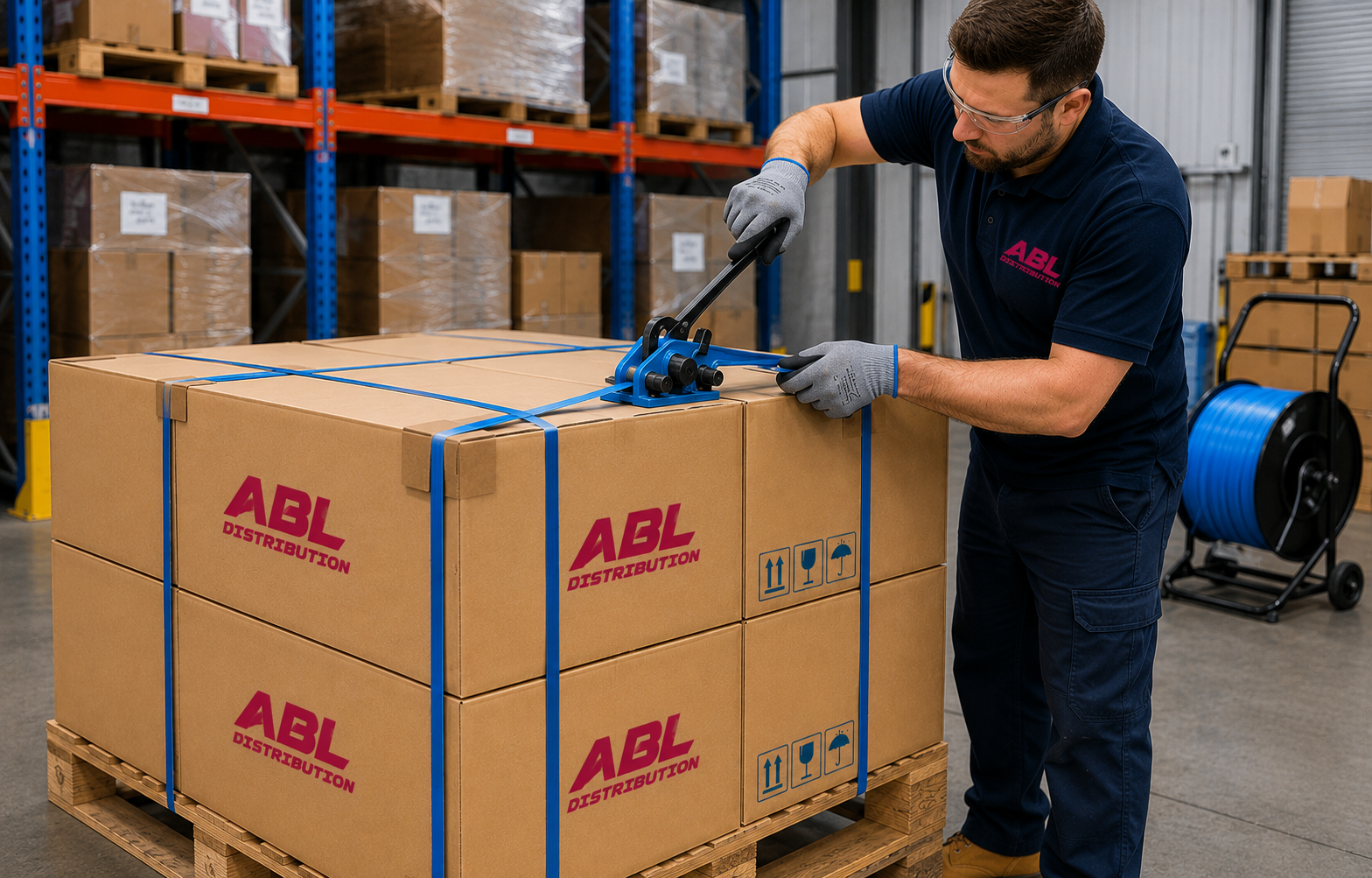
Manual strapping tools include tensioners and crimpers. A tensioner tightens the strap, while a crimper seals the strap using compatible metal seals. These are common for hand strapping applications.
Semi Automatic Strapping Machines
Semi automatic strapping machines are commonly used with machine grade polypropylene strapping. They are ideal for faster carton or package strapping in warehouse and dispatch areas.
Automatic Pallet Strapping Machines
Automatic pallet strapping machines are designed for higher volume operations. They improve speed, consistency and efficiency when strapping large quantities of products.
Battery Powered Strapping Tools
Battery powered strapping tools are ideal for PET strapping applications where faster tensioning and sealing is required. They are commonly used in busy warehouse, shipping and manufacturing environments.
How to Strap a Pallet Safely
Build a stable pallet.
Make sure cartons or products are stacked evenly and do not overhang the pallet edges unless required for the load type.
Add protective corners.
Use cardboard, plastic or metal edge protectors to reduce strapping damage and spread pressure across the load.
Feed the strap correctly.
Pass the strap under the pallet using safe handling methods. An under pallet strap feeder rod can make this easier and reduce bending.
Tension the strap.
Use the correct tensioner, strapping tool or machine to tighten the strap. Do not over tension, as this can damage cartons or crush the load.
Seal or fasten the strap.
Use compatible seals, buckles, clips, wire buckles or battery powered tools depending on the strapping type and application.
Trim excess strap safely.
Cut excess strap carefully using suitable cutting tools. Be cautious of strap recoil, especially with steel strapping.
Inspect the load.
Check the strap tension, seal placement, buckle position, edge protection and overall pallet stability before moving or shipping the load.
Pallet Strapping Safety Tips
- Always wear suitable PPE, including gloves and eye protection when handling tensioned strapping.
- Use the correct strapping tool for the material, width and application.
- Never stand directly in line with tensioned strapping.
- Be careful when cutting steel strapping, as it can recoil suddenly.
- Use protective corners to prevent strapping from damaging cartons or products.
- Do not over tension strapping, especially on cartons or crushable goods.
- Keep tools maintained and inspect them regularly.
- Use compatible seals, buckles, wire buckles, tools and strapping sizes.
- Store strapping rolls safely to prevent tangling, tripping hazards or roll damage.
Frequently Asked Questions
What is composite strapping?
Composite strapping, also called cord strapping or composite cord strapping, is a flexible polyester-based strap used for load securing. It is lightweight, rust-free and often used as a safer alternative to steel strapping for many medium to heavy duty applications.
What is the strongest pallet strapping?
Steel strapping is generally the strongest option and is used for heavy industrial loads. Polyester PET strapping and composite strapping are also strong options suitable for many heavy pallet applications.
What is the difference between polypropylene and polyester strapping?
Polypropylene strapping is lightweight and cost effective for light to medium loads. Polyester PET strapping is stronger, more durable and better for heavier palletised loads.
When should I use composite strapping?
Composite strapping is useful for irregular loads, export pallets, machinery, timber, bundled goods and applications where a rust-free, flexible and safer-to-handle alternative to steel strapping is preferred.
When should I use steel strapping?
Use steel strapping for very heavy, sharp, hot or rigid loads where maximum strength and minimal stretch are required.
Can PET strapping replace steel strapping?
In many pallet strapping applications, PET strapping can be used as a safer and more cost effective alternative to steel. Composite strapping may also be suitable for some applications. However, steel may still be required for sharp, hot or extremely heavy industrial loads.
What is a strapping machine?
A strapping machine applies strap around cartons, packages or pallets. Machines may be semi automatic, automatic or battery powered depending on the application and volume required.
What is a pallet strapping tool?
A pallet strapping tool is used to tension, seal or cut strapping. Common tools include tensioners, crimpers, cutters, battery powered strapping tools and composite strapping tensioners.
Do I need protective corners for pallet strapping?
Protective corners are recommended when strapping may cut into cartons, crush edges or damage goods. They help distribute tension and improve pallet stability.
Can pallet wrap replace pallet strapping?
Pallet wrap helps contain and protect goods, but it does not always replace the strength of pallet strapping. For heavy, unstable or high-risk loads, strapping is often required.
How many straps should I use on a pallet?
This depends on the load size, weight and stability. Many standard pallets use two or more straps, while heavy or long loads may require additional straps.
What happens if I use the wrong seal or buckle size?
Using the wrong size seal, buckle or tool can reduce holding strength and may cause the strap to fail. Always match the strapping width with compatible tools and accessories.
Need Help Choosing the Right Pallet Strapping?
ABL Distribution supplies polypropylene strapping, polyester PET strapping, composite strapping, steel strapping, polywoven strapping, strapping machines, tools, seals, buckles, dispensers and protective corners for packaging, shipping and warehouse applications.
Our team can help you choose the right strapping system for your load, application and equipment.
Contact ABL Distribution